Friday, November 9, 2012

Scotland's mysteries.

3 comments

Particularly in the United States, where a large portion of our population claims Scottish ancestry, Scotland has an air of mystique, and Scottish culture enjoys a cult-ish following. I have received many beautiful postcards from Scotland (I wish I could show them all), but in order to keep this post focused, I've decided to explore a small region of Scotland called Argyll.

Argyll is part of the Scottish Highlands. Just by looking at this map postcard to your left, you can see how mountainous the northwestern two-thirds of the nation is - this comprises the Highlands, more or less. The Scottish Highlands are quite empty - they have one of the least-densely populated areas in all of Europe. Culturally, the Scottish Highlands is quite different than the neighboring Lowlands. The peoples of the Highlands were traditionally the Gaelic-speaking Scotsman, and some rural areas of the Outer Hebrides (the larger islands northwest of the mainland) still speak Gaelic. This makes Gaelic Highland Scotland more linguistically related to Ireland than to mainland Britain.

The region of Argyll (see here for map) is a coastal region of the Scottish Highlands, and the second largest county in Scotland. The name derives from the Old Gaelic airer Goídel, or "border region of the Gaels." The word airer carries the additional meaning of the word "coast" when applied to maritime regions, so the place name can also be translated as "Coast of the Gaels." The largest two towns in this sparsely-populated county have just barely over 8,000 people. The county's third-largest town, Campbeltown (pop. 5144), is historically known as a whiskey-producing region and home to distilleries such as Glengyle and Glen Scotia.

Campbeltown almost certainly received its name from the Scottish clan that presided over the Argyll region - Clan Campbell. (The chief of Clan Campbell eventually became the Duke of Argyll.) Although the British government attempted to quash clan culture following the Jacobite Uprisings of the 18th century, the clan culture has persisted, particularly in rural areas. In a recent Yahoo! Answers post I found during my internet research for this post, I found this interesting example of hostilities between clans that began over 300 years ago and continue to this day. I recommend you read the post, but I particularly loved the example of the Clachaig Inn in Glencoe (historically a region presided over by Clan Donald), which still hangs a sign on the door stating "No Hawkers or Campbells."

The Campbell clan's name derives from the Gaelic caimbeul, meaning "wry mouth," "crooked mouth," or "twisted mouth." The earliest known Campbell is Gilleasbaig of Menstrie, who was active around the year 1260. The Clan Campbell tartan, known as Black Watch, is highlighted in a red box on the above postcard. And in case you were wondering: your favorite pair of argyle socks do, in fact, get their name from the Argyll region of Scotland.

And this leads me to the postcard that inspired this entire post: the beautiful Kilchurn Castle, located on Loch Awe in Argyll. Kilchurn Castle was constructed around 1450 by Sir Colin Campbell as a five-storey tower house with a courtyard defended by an outer wall. The castle passed to Clan MacGregor for a time and then returned to Clan Campbell through marriage. The MacGregors remained stewards of the castle until the early 17th century, when a feud between the two clans brought the castle back into the possession of Clan Campbell. In 1760, the castle was badly damaged by a lightning strike and was completely abandoned. If you visit the castle today, the turret of a tower still rests upside-down in the courtyard as a result of the lightning strike 250 years ago.

The castle is now under the protection of the Scottish government, and you can visit it in the summer time by boat or on foot. You can read more history of the castle and see many lovely photos at this Undiscovered Scotland website.

Tuesday, October 23, 2012

The fortresses of Fujian province

2 comments

CN-656595: Earthen House, or Fujian Tulou
I've been gone from this blog for two years now, but I hope I'm not forgotten. Postcards remain a favorite hobby of mine and I'm settled enough to begin writing about the beautiful cards I receive. I hope you'll come back and visit again!

This beautiful family scene comes from Postcrossing user sysukun, and depicts an entrance to Earthen House, more commonly known as a Fujian Tulou. There are about 46 sites in the mountainous region of Fujian province composed of these homes, and together they make up a UNESCO World Heritage Site.

A tulou is a large, enclosed, earthen-made building, usually in a rectangular or circular shape. They are fortified and usually have a single entrance to protect up to 80 families who live there. These buildings have been constructed since the 12th century in Fujian province, and were originally designed to protect against armed bandits that frequently roamed the Fujian region.

Fujian Tulou are unique because they are one of the original examples of community housing for equals. All the rooms in a tulou were the same size and shape, built with the same quality materials, and decorated the same. Tulous were generally occupied by one or two large family clans. If a clan grew over time, additional concentric rings were added around the original ring. You can see the inner courtyard of a traditional Fujian Tulou above. It's easy to imagine how such a place would inspire a sense of safety and community.

I'm glad to be back - hope you'll keep checking in on my newly revived blog!

Tuesday, June 29, 2010

The world's oldest skyscrapers: Shibam, Yemen

2 comments


YE-46
Originally uploaded by krhocevar_postcrossing
It was a happy day at my house when an official Postcrossing postcard arrived from Yemen. For ages now, I've been contemplating the best subject to discuss in my post about this mysterious country. Finally, I've decided something: some places in this world are so unique, and so different from what we know, that posting some words on a blog will never truly do it justice. Yemen is such a place, so I'm posting a video I think will be much more instructive than anything I can write. It's a little over 9 minutes, so it's an investment of time, but you'll see what the streets of Shibam look like, you'll see a traditional ceremony, see the food the locals eat, and learn a little history. I've never seen a place anything like it.

A few words first: Shibam is a UNESCO World Heritage Site, because it is said to be home to the world's oldest skyscrapers. It is a walled city and the first known example of urban planning based on vertical construction, and has been called the Manhattan of the desert. Some of these buildings, made of mud brick and up to eleven stories tall, are over half a millennium old. Shibam itself is over 1700 years old.

The economy of the region of Hadramaut is largely agrarian. Cities exist mainly as a place to sell and distribute goods produced on farms. The region is home to the Arab ethnic group the Hadhrami, which has its own Arab dialect. The Hadhrami have diaspora communities around the globe, particularly in Singapore, India, Malaysia, and Indonesia.

Please enjoy the video, I really did!

Friday, June 4, 2010

Krka National Park, a Croatian gem.

7 comments


I'm pretty fascinated with Croatia, I have to admit it. And among the many beautiful scenes I've viewed on postcards from that country, I think their national parks might be among the loveliest of all.

This gorgeous postcard, which came from rlicul a few months ago, shows Krka National Park, an area surrounding the beautiful Krka River. (Which has its own impressive and informative website.) In particular, the postcard displays the beautiful Skradinski Buk waterfalls, the most popular area of the park. These cascades travel for 400 meters (1312 feet) and descend a total of 47 meters (154 feet), and they end in a broad, clear, and beautiful pool that is a popular spot for visiting swimmers. Nearby the cascades is the village of Skradin (click for stunning panoramic photo), an award-winning cultural experience with old mills, crafts, and other experiences for visitors. It was founded as an Illyrian settlement, Scardona, prior to its takeover by the Romans, and has been a settled area for thousands of years. Roman ruins are another important area to visit in Krka National Park.

Recently I received a postcard
showing another breathtaking spot inside Krka National Park: Visovac Island. This place, which perhaps looks like a tropical oasis or possibly heaven on earth, is actually very sacred ground: it is home to Our Lady of Mercy Franciscan monastery. This beautiful monastery was founded in the 14th century by Augustinian monks, and then expanded and adapted by Franciscans who escaped from Bosnia during the Turkish invasion of the 15th century. The present incarnation of the monastery was built in the 18th century. Housed in the monastery's historic library is a particularly rare incunabula of Aesop's fables (1487), a collection of sultan's edicts, and a sabre belonging to Vuk Mandusik, one of the best-loved heroes of folk epics. This monastery is still a very holy place; although ferries do take visitors to the island, they are only allowed to stay for 30 minutes in order to maintain the piety of the monks who live there.

This is a really nice video showing some beautiful spots in Krka National Park. You can view it here, or if you click on it and go to Vimeo, you can view it in HD. Enjoy!


Tuesday, May 4, 2010

Folk dance of Turkey: Horon

5 comments

Not too long ago, I featured the dance of the Whirling Dervishes of Turkey here on Postcard Voyager, a dance reserved for an elite religious sect. Here I'm back again, ready to feature another traditional dance of Turkey, this time a folk dance from the Black Sea region in the northeast of the country. The back of this card provides very little information about the name of this dance, or even what part of the Black Sea coast it comes from, but I've managed to deduce some information based on how the dance looks and videos I've been able to find on Youtube. :)

Turkey has many folk dances, and the one featured here is called the horon. The name comes from the Turkish word "horom," which refers to a line of six or seven corn stalks tied together to form a lattice. From a distance, it appears to be a line of people joining hands with their arms raised. The horon is the most well-known dance of the Black Sea region (and is also performed in other countries located on the Black Sea, such as Bulgaria), and is meant to suggest the actions of fishermen, the swimming fish, and the sea. It features alert and tense shivering movements and sudden squatting. The horon is traditionally performed by a line of either men or women, but generally not both at the same time, except in rare cases called "rahat horon," or "comfortable horon." In these cases, the dance is slower, simpler, and more relaxed. (source: University of Florida website) The people of the Black Sea region live in fertile, isolated valleys, and are known for their merriness and their lack of inhibition. They remind me of Mediterranean peoples of Greece, and probably their culture was influenced by similar forces.

I've found another interesting website describing the people of Turkey's Black Sea region. As you know, it's important not to stereotype groups of people or consider them to be "all the same." However, it can be useful to determine typical traits. This is how a man of the Black Sea (or a "Laz") is described:
"He sports a majestic nose and speaks Turkish with an outrageous accent. His diet consists of hamsi (Black Sea anchovies), cooked to the legendary one hundred recipes that include hamsi bread and hamsi jam, with corn bread and dark cabbage to accompany. He dances a wild horon to the syncopated, manic tunes of his kemençe (bowed instrument that sounds like a fiddle). His oddball sense of humor makes him the butt of an entire genre of jokes. To a certain extent these jokes correspond to those of the Polish, Scottish, Marsilian or Basque variety, but they lack the crude ridicule that characterizes some of the latter. In most stories he either pursues an altogether wacky idea, or responds to situations with an insane non-sequitur. The best ones contain a hint of self-mockery, and it is not really clear who the joke is on. Inevitably the most brilliant Laz jokes are invented and circulated by the Laz themselves." (source: Kara Lahana)

I'd like to share this wonderful video (from what looks like 1971 or so) showing the horon in a very rustic village performed by a little old lady in all black.


Now watch this more modern and complicated version of the horon. It gets better and better starting at the 1:20 mark, so stick with it, it'll be worth it, trust me.


(h/t to Pinar for sharing the beautiful postcard with me!)

Saturday, April 10, 2010

A sad day in Poland.

2 comments

My sincerest condolences to the nation of Poland over the terrible loss of President Lech Kaczynski, his wife, and other government officials. My heart is full of sadness for you all, and could not imagine withstanding such a terrible loss myself.


My thoughts are with you.

Tuesday, March 16, 2010

Berlin ist schön! (Germany Vacation Part 3)

1 comments

Berlin is beautiful! Let's hope so, because it's the final stop on our three-part Germany tour. To get to Berlin, we'll have to take the train from Bremen, with a change in Hannover. Berlin is full of things to do - we could stay for weeks and not see everything. So what do we do in our short time here?

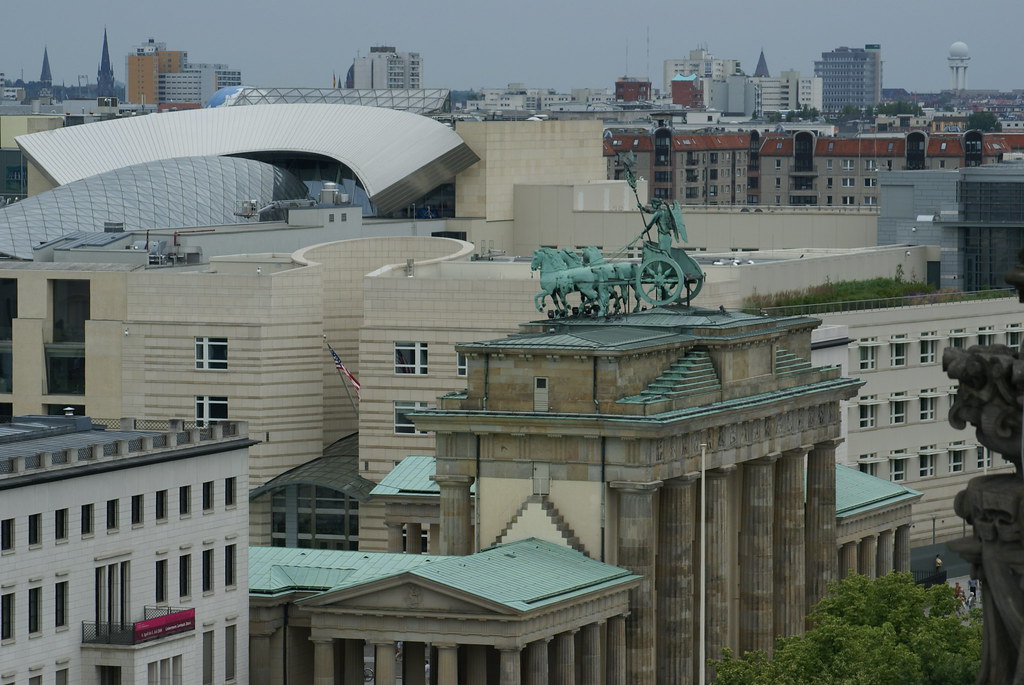
It would be wise to partake of Berlin's historical points, because it played a significant role in Europe after World War II. We should visit Checkpoint Charlie and the East Side Gallery. The East Side Gallery is a memorial section of the Berlin Wall which still stands, and is covered in murals by artists all over the world. (You can see it in virtual tour format - when you reach the webpage, read the history, then close it and follow the arrows on the ground through the opening in the wall - the murals are on the other side.) Next we'll visit the Brandenburg Gate, comemmorating the border between East and West that once stood there.

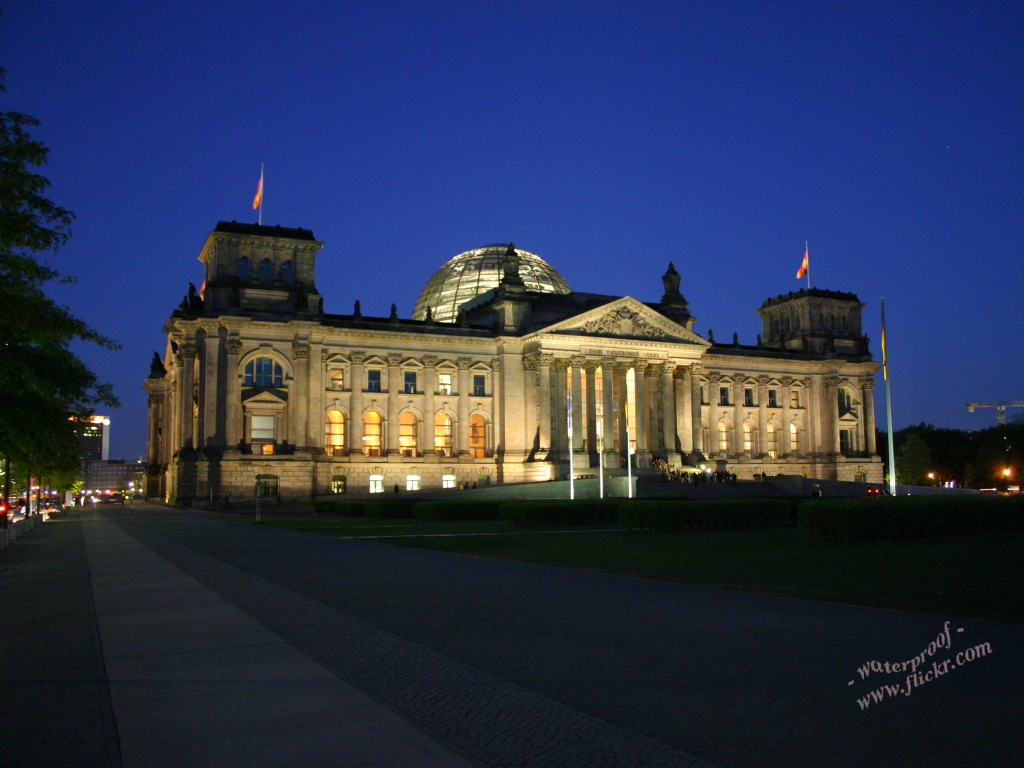
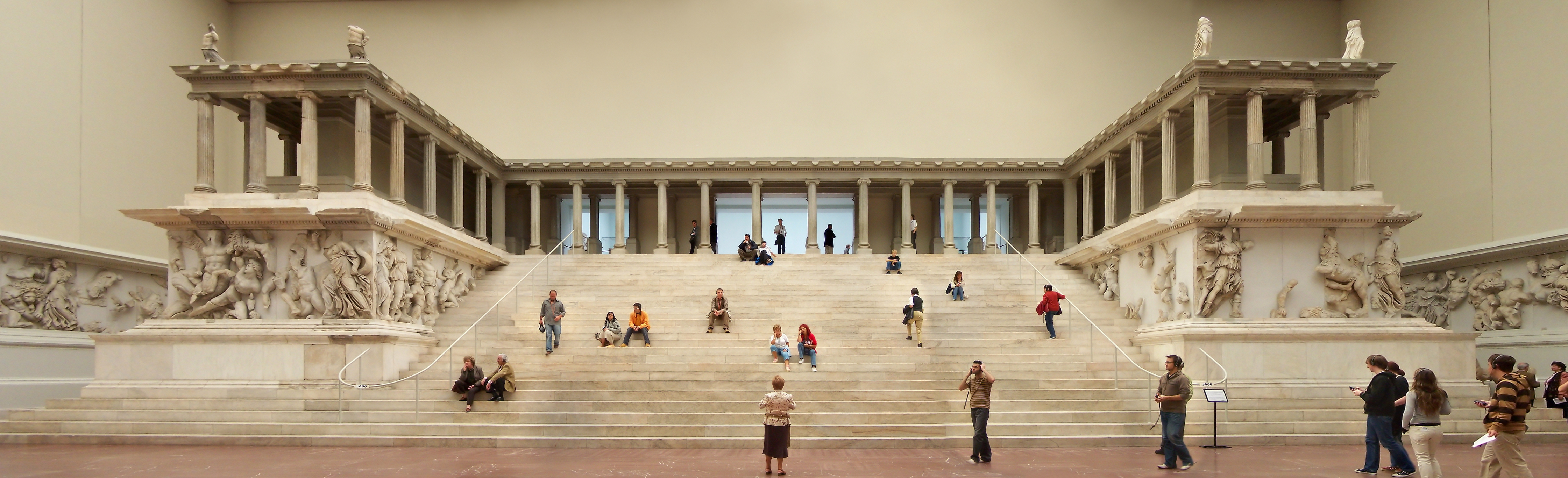
Next we'll want to stroll over the Reichstag, a five minute walk from the Gate. The Reichstag is home to the German Parliament, and from the top, offers a marvelous view over central Berlin. After taking in the view we'll head over to the Museum Island, a UNESCO World Heritage Site, and home to a number of fascinating museums and the Berlin Cathedral, seen on the postcard. Our tour guide Anja suggests visiting the Pergamon Museum, where many ancient excavation have been reconstructed, including the huge Pergamon Altar, the Market Gate of Miletus, and the Ishtar Gate. The Pergamon Museum houses an Antiquities Collection, an Islamic Art Museum, and the Middle East Museum.

After enjoying Museum Island, we might decide to take a day trip to Potsdam to see the Palace of Sanssouci, the former palace of Frederick the Great, King of Prussia. It has been said that it rivals Versailles in France.

Sadly, this is the end of our trip through Germany. It's been splendid - not the real thing, but close! I hope you enjoyed the tour! Look for travels through Turkey with my friend Pinar coming very soon. ;)


Friday, March 12, 2010

Welcome to Bremen! (Germany Vacation Part 2)

2 comments


Continuing our journey through Germany, we've hopped on a train in Cologne and now we're on our way to Bremen, three hours northeast of Cologne. Bremen is located in North Germany, and the city has been shaped by its close relationship with sea trade and the Hanseatic League. You can enjoy an interesting overview of the city at Bremen in 3 minutes. Important stops on our visit to Bremen will be the Bremen Town Musicians statue (a story by the Grimm Brothers, seen on the card to the left), the statue of Roland, Bremen's protector erected in 1404, and the Bremen Town Hall. We can wander through the Schnoor quarter, Bremen's oldest with houses dating to the 15th century. After wandering a while, we can stop at the new Universum, a hands-on science museum with about 250 exhibits.

After a day in Bremen, we're going to spend a day in Bremerhaven, about 40 minutes north of Bremen, and situated on the North Sea. We'll take a boat ride down the River Weser to get from Bremen to Bremerhaven, and then perhaps we'll head to the Klimahaus, which you can tour in 360 panorama. The Klimahaus takes the visitor on a journey along the 8th line of longitude, through the many different climates of the world. After the Klimahaus we'll go to the German Emigration Center, which details the history of German emigration to many countries. After our day in sunny Bremerhaven, we'll head back to Bremen to hop on a train to our final destination... which we'll visit in my next post!

Thursday, March 11, 2010

Germany Vacation, Part 1: Cologne

0 comments

As part of the Make Me Smile Round Robin I started several months ago, I started an experimental group called "I need a vacation," where the participants plan an itinerary for one another on the backs of three postcards. I am so excited with the results! Anjaaustel sent me on a wonderful trip through north Germany, complete with directions on which trains to take and what sights to see! So I thought I'd take you along with me. You can see her own text below; I'm just reiterating her own itinerary. I've spent a bit of time investigating many of these places, so I encourage you to click each of the links to get the most out of your virtual travel experience!

Our plane will land in Frankfurt, and then we'll take the hour-long ICE train to Cologne. When the train crosses the Hohenzollern Bridge over the Rhine, which you can see in the postcard image, we'll see the Cologne Cathedral for the first time. The train drops us right in front of the cathedral. Click here for your virtual tour of the interior.

After thoroughly exploring the cathedral, we're off the explore the Roman-German Museum next door. Cologne was founded as a Roman settlement, and the museum was built over an existing Roman mosaic.

Next we head down the stairs to walk along the Rhine for a while. We head into town a few blocks to visit the Chocolate museum and the Olympics and Sports Museum, and maybe take a break to have a pint of Kölsch, the local brew (and also the local dialect).

We continue our stroll around town and head to the Kölner Zoo, one of the best in Germany. We'll take our time here, because it's our last stop in Cologne. Tomorrow we'll head to another destination, a post which I'll share with you... tomorrow. ;)

Sunday, February 21, 2010

Whirling Dervishes and the Sema

4 comments


"Whirling dervish" just seems like an exotic, mysterious thing, doesn't it? I never knew quite what it was, but when I received this postcard in the mail from one of my favorite Postcrossers, pinuccia, I decided it was time to learn more about it. As my repeat readers will know, I have two favorite posting themes - dances and food. Today, it's a dance.

"Whirling dervish" is a colloquial name for members of the Mevlevi Sufi order, an Islamic sect founded in Konya, Turkey by Celaleddin Mevlana Rumi in 1273. The dancing ritual that the Mevlevi are famous for is called the Sema. Sema represents the mystical journey of man's spiritual ascent through mind and love to "Perfect," the state in which the follower grows through love, deserts his ego, and finds truth. To me, this all sounds
remarkably like Hindu mysticism, which I suppose could have influenced this sect in some respect.

The dance is divided into four parts - a song of praise to the Prophet Mohammad, followed by a bowing process and the removal of the black robes. The main dance, called the Four Selams, consists of the dancers, called semazen, spinning around the Sheikh. The semazen represent the moon, and the Sheikh represents the sun. The semazan spin on their right foot with their right palm facing upward toward heaven and the left hand pointing toward the ground, to represent a sort of communion of heaven and earth, as well as the spiritual ascension that believers experience. The Four Selams represent recognition of God, recognition of unity with God, ecstasy associated total surrender, and peace of heart due to divine unity. The ceremony is concluded with a recitation from the Holy Qu'ran.

From what I gather, the Mevlevi sect was abolished by Mustafa Kemal Ataturk and the monasteries were converted to museums. Decades later, the brotherhood was revived by the Turkish government as a "cultural association" - mainly for tourism reasons, I suspect. Now the brotherhood tours the world performing the ceremony.


Tuesday, February 16, 2010

Olympics time - go USA!

2 comments

Are you enjoying watching the Olympics? I know I am. Here's a postcard showing the beautiful Eden that is the home of the 2010 Winter Olympics. You can read more about the site of the 2010 Olympics by reading my blog post from December 1.


Keep up to date and support the US Olympic team here.

Saturday, February 6, 2010

Blizzard!

1 comments

To celebrate my first blizzard since moving to Pittsburgh three years ago, I thought I would post a collection of beautiful winter postcards I've received through Postcrossing. Here in Pittsburgh, the world is white, and the city is completely shut down. (In order these cards show: Utrecht, Netherlands; Bavaria, Germany; St. Petersburg, Russia; Kinderdijk, Netherlands; Copenhagen, Denmark; Norway; Germany; and Tallin, Estonia.)


Monday, February 1, 2010

Buddha Says Hello from Hong Kong

3 comments

This Buddha statue is located at Po Lin Monastery on Lantau Island, Hong Kong. His official name is the Tian Tan Buddha, and he was constructed out of bronze in 1993. The rest of the info comes almost directly from Wikipedia:


1. The base is a model of the Altar of Heaven or Earthly Mount Tian Tan, the Temple of Heaven in Beijing. (Hence the name.)
2. It is one of the five large Buddha statues in China.
3. He sits on a lotus throne on top of a three-platform altar.
4. It is surrounded by six smaller bronze statues known as "The Offering of the Six Devas" and are posed offering flowers, incense, lamp, ointment, fruit, and music to the Buddha. These offerings symbolize charity, morality, patience, zeal, meditation, and wisdom, all of which are necessary to enter into nirvana.
5. Buddha is 110 feet (34 meters) tall, and weighs 280 tons (250 metric tons).
6. Buddha's right hand is raised, representing the removal of affliction. Which is perfect, because my friend Iris sent me this postcard to cheer me up after a bad day.

To me, Hong Kong seems like a really fascinating place. As many people know, Hong Kong was a British territory from the mid 1800s until 1997, when governance was formally handed over to the Chinese government. As a result, Hong Kong is a unique blend of East and West - it has one of the world's leading economies, and it is among the healthiest and most well-educated regions in the world. Western institutions like fast food restaurants and a Hollywood-style film industry
are integrated with a very serious belief in feng shui and other folkloric beliefs - for instance, buildings often lack any floor with the number 4 in it, due to its resemblance to the word "die" in the Chinese language.

In Hong Kong, most people speak Cantonese, but English is also an official language, and many people speak it primarily or as a fluent second language. About 95% of Hong Kong's population is of Chinese descent, with small but visible enclaves of Indians, Pakistanis, Nepalese, Vietnamese, Europeans, Japanese, Koreans, and Filipinos. Interestingly, mainland Chinese do not have right of abode in Hong Kong, nor can they enter the territory freely.

About 90% of those living in Hong Kong practice a mix of local religions - mainly Buddhism, Confucianism, and Taoism. About 8% of the population is Christian, and there are smaller groups of Sikhs, Muslims, Jews, Hindus, and Baha'i. Religious freedom is guaranteed under the Basic Law.

Tuesday, January 12, 2010

Postcard Voyager: The Twilight Edition

2 comments

So, it's no secret that I'm a big Twilight fan - love the books, love the movies. I've read them and watched them over and over again, and I have a hard time explaining why. I mostly take comfort in the fact that about a billion other women (and a few men) feel exactly like I do.


So imagine my joy and surprise when, out of the blue, a very kind Postcrosser contacted me asking for a private swap - I had a card she really liked - and offered me postcards from Forks in return! And not only that, but she goes there regularly and can get them for me anytime I want. *insert hallelujah choir here*

Long story short, she sent me a great envelope full of beautiful postcards from Forks, Washington, the small town on the Olympic peninsulawhere the Twilight series takes place.
Fortunately for my legitimacy as a blogger, this also happens to be the location of a pretty amazing UNESCO World Heritage Site, the Olympic National Park, home to one of the world's few temperate climate rainforests. If you've seen the Twilight movies, you've seen these blindingly green forests on the big screen - they are really something.

The park has three distinct areas - a rugged coastline, glaciated mountains, and temperate rainforest. Quite a variety for such a small area. I'm fascinated by the rainforest - because it's situated on a fairly isolated peninsula (cut off from the continent by mountains), the plant and animal life has evolved in its own unique way, so that many species exist no where else on earth. Additionally, the rainforests are among the northernmost areas of the continent to not be glaciated, so it was a refuge for species escaping the encroaching ice.

As Twilight fans will know, this area is also home to several Native American groups - the Quileute, located on the La Push reservation, and the Hoh people along the Hoh River. It is clearly a treasure, a place unlike any other on the earth.

Tuesday, December 15, 2009

Wordless Wednesday - Bamboo near Kyoto

4 comments


Friday, December 11, 2009

Melba: The Dame and the Dessert

11 comments

So this is my first time participating in Postcard Friendship Friday, But I figured it was about time to try it! And speaking of postcards of friendship, I wanted to share one of the amazing postcards I received as a HUGE surprise in my mailbox. The Postcrossing Official Forum hosted a "Random Act of Smileness" drawing to win a set of beautiful Australian maxi cards. Anyone could nominate a person who made them smile, and then a winner was drawn at random. I knew about the contest but had no idea I was nominated, and I was totally shocked when the prize showed up in my mailbox. Hurray! :)

This card shows Dame Nellie Melba (1861-1931), an Australian soprano and the first Australian to achieve international fame as a classical musician. Her parents came from Scotland, but Dame Melba was a native Australian and considered it her home throughout her life. She had an astoundingly successful career, with her major success being her appointment as prima donna at Covent Garden for nearly 30 years. Her albums always sold for a higher price than other singers', and before WWI, her performances were always known to be lavish affairs - important social events where women wore their finest jewels.

Dame Melba received that title from the British Empire for her charity work during World War I. She was the first entertainer to receive the title. She was also the first Australian to grace the cover of Time Magazine, and she was chosen to sing the Australian national anthem at the official opening of the Parliament House in Canberra on the day which Canberra became Australia's capital city.

Despite these accolades, Dame Melba was known to be a temperamental diva, and fought tooth and nail to be the center of attention whenever possible. She was generally not well-liked by her colleagues, and the three words "I am Melba" were considered an acceptable explanation for her frequent demands.

The stamp on this lovely card shows a delightful confection named after Dame Melba - the Peach Melba. This dessert was invented around 1892 by the French chef Auguste Escoffier at the Savoy Hotel in London to honor the Dame. In its original incarnation, the decadent dessert was displayed on an ice sculpture of a swan. The swan carried peaches, which rested on a bed of vanilla ice cream, and were topped with spun sugar. In 1900 Escoffier altered the recipe, omitting the ice swan and topping the dessert with fresh raspberry purée, which is how it is still served today.

Sunday, December 6, 2009

Legong dancers of Bali, Indonesia

0 comments

I love learning about traditional dances - they often say so much about the local culture, and they're almost always interesting to watch. And thanks to the marvel of YouTube, I can watch all of them with my own eyes. The girls pictured on the card here are dressed up for the traditional Legong dance of Bali, Indonesia.


The Legong Dance is a reenactment of a period in history of East Java during the 12th and 13th centuries. When on a journey the King of Lasem finds the maiden Rangkesari lost in the forest. He takes her home and locks her in a house of stone. Rangkesari's brother, the Prince of Daha, learns of her captivity and threatens war unless she is released. Rangkesari begs the king to release her to prevent war, but the king refuses. On the way to battle he sees a bird of ill omen that predicts his death, which eventually comes true. In particular, the dance dramatizes the the farewell of the king on his way to battle and the ominous encounter with the bird.

The dance includes three performers - the condong, a female attendant of the court, and two legongs. The girls, who are rarely older than 14, are bound head to toe in gold brocade, with a gold and flower crown and dramatic face make-up. Often the performers are handpicked by the local prince. These girls would have trained in Legong from the age of 4 or younger. The dance is accompanied by the unique instrument, the gamelan, and individual layers of eye, hand, hip, and foot movements are meant to reflect the various percussive layers of the gamelan.

But words never do justice to a beautiful and complicated dance like the Legong. Watch the video below and see for yourself how amazing it is. I especially love the eye movements.

Tuesday, December 1, 2009

Festival of Postcards - White

1 comments


Are you ready for the 2010 Winter Olympics? I know I am! I've always been fond of the Winter Olympics - I love the figure skating, the skiing, hockey, and those crazy people who do the skeleton, who must be missing the fear gene. This year the Olympics are going to be held in Vancouver, British Columbia, Canada, with some events taking place in nearby Whistler, which you see in the postcard to the left. Whistler has the largest single ski area in North America, and it's gorgeous, too!

The logo for the 2010 Olympics depicts Ilanaaq the Inunnguaq. What on earth does that mean? you ask. In the language of a local Native American tribe, the Inuktitut, Ilanaaq means friend, and an Inunnguaq is a stone landmark or cairn, which is what the logo depicts. There is a very similar stone landmark on Whistler Mountain. The mascots for the Olympics are Miga, a mythical sea bear (part orca and part kermode bear), and Quatchi, a sasquatch (also known as Bigfoot).

Vancouver is hosting the Olympics, and what a magnificent setting for these events. Vancouver is known around the world for being beautiful, with a diverse population, a high standard of living, and has been consistently named one of the most livable cities in the world for over a decade. Vancouver is the warmest city ever to host the Winter Olympic games, with an average temperature of 4.8 C (40.6 F) in February. It is the most populous city to ever host the Games (2.1 million metro population), and it is unique in holding its opening ceremonies indoors. It is also one of very few cities to hold several events at sea level.

So I don't know about you, but I'm definitely going to tune in! The Olympics will be held February 12-28, 2010.

Tuesday, November 17, 2009

Sachertorte, an Austrian temptation

2 comments


I always enjoy doing blog posts about food, so here's an especially yummy, sweet, chocolate-y one for you. This postcard, a special surprise sent from Austria, shows a dessert called Sachertorte, named after its creator Franz Sacher. This confection is traditionally composed of two layers of dense, mildly sweet chocolate sponge cake with a layer of apricot jam in the middle. The cake is covered on the top and sides with a dark chocolate icing and traditionally served with unsweetened whipped cream.


Franz Sacher concocted this recipe in 1832 for politician Klemens Wenzel von Metternich in Vienna, Austria. True Sachertorte can only be found in Vienna and Salzburg, Austria, as the closely-guarded recipe was trademarked by the Hotel Sacher in 1876. The Sachertorte is considered one of Vienna's most famous culinary specialties.

Although the recipe is secret even today, many people have come close to replicating it. You can find a possible recipe below.

Ingredients
6 oz (175 g) dark chocolate (50-55% cocoa)
1/2 c (110 g) soft butter
1/2 c (110 g) golden caster sugar
4 large egg yolks, lightly beaten
5 large egg whites
1/4 teaspoon (1 mL) vanilla
1/2 c (110 g) plain flour
1/2 teaspoon baking powder
For the icing:
6 oz (175 g) dark chocolate (50-55% cocoa)
5 fl oz (150 ml) double cream
2 teaspoons glycerine
2 teaspoons smooth apricot jam
Preheat oven to 300 F (150 C).

1. Start off by melting the chocolate for the cake. Break it up into a heatproof bowl, then place the bowl over a saucepan of barely simmering water and leave it to melt slowly, being careful not to let the bottom of the bowl touch the water or the chocolate will overheat. While that’s happening, using an electric hand whisk, cream the butter and sugar until very pale and fluffy. Now beat in the egg yolks, a little at a time, whisking well after each addition.
2. Then, when the chocolate has cooled slightly, fold it gradually into the creamed butter mixture and then add the vanilla extract. Next, sift the flour and baking powder together into a bowl, then put it all back into the sieve and sift it into the mixture a little at a time, carefully folding it in with a large metal spoon. When all the flour is incorporated, wash the whisks in warm, soapy water and dry them thoroughly.
3. Next, in a large, clean bowl, whisk the egg whites to the stiff-peak stage, which will take 3-4 minutes, and then carefully fold them into the mixture, bit by bit, still using a metal spoon. Now pour the mixture into the prepared cake tin, level the top and bake it on the middle shelf of the oven for about 1 hour, or until firm and well risen. When it’s cooked, allow the cake to cool in the tin for 10 minutes before turning it out on to a cooling rack. Then leave it to get quite cold.
4. Now warm the apricot jam and brush the cake all over with it. Next, to make the icing, melt the chocolate with the cream, again in a bowl over simmering water. Then remove the bowl from the heat, and stir in the glycerine, to give a coating consistency. Pour the icing over the whole cake, making sure it covers the top and the sides completely. Then leave it to set, which will take 2-3 hours.

Saturday, November 14, 2009

Who is Oscar Niemeyer?

2 comments

The name sounded familiar, but I wasn't really sure who Oscar Niemeyer was. After receiving three postcards from Brazil with his architecture on them, I decided it was time to do a little research.


Oscar Niemeyer is a Brazilian architect born in Rio de Janeiro in 1907. Before he was 30 he was an architect of some renown, designing the Brazilian pavilion at the New York World's Fair in 1939. Over the course of his career Niemeyer designed many famous buildings, including the United Nations headquarters in New York, the public buildings of Brasilia, a UNESCO World Heritage Site, and the Niterói Contemporary Art Museum in Brazil, shown below.

Niemeyer was also a famous communist. He grew up during the time of the Russian Revolution
and joined the Brazilian Communist Party in 1945. When the Brazilian government was overthrown in a military coup in 1964, Niemeyer's leftist political leanings made him a target of the new dictatorship. In 1966 pressure from the government led Niemeyer to move to Paris, where he began a new phase of his career and also began designing furniture.

Niemeyer did not return to Brazil until 1985, when the government reverted to democracy. He continued his prolific career there, and at the ripe old age of 101, his works are still under construction around the world. Niemeyer's architecture is best described as graceful, elegant, and harmonious; his style combines Brazilian baroque and modernist features to create light, curved forms. He pioneered the use of reinforced concrete to form unusual curves or shells, a common feature in many of his works.

Related Posts with Thumbnails