Tuesday, March 16, 2010

Berlin ist schön! (Germany Vacation Part 3)

1 comments

Berlin is beautiful! Let's hope so, because it's the final stop on our three-part Germany tour. To get to Berlin, we'll have to take the train from Bremen, with a change in Hannover. Berlin is full of things to do - we could stay for weeks and not see everything. So what do we do in our short time here?

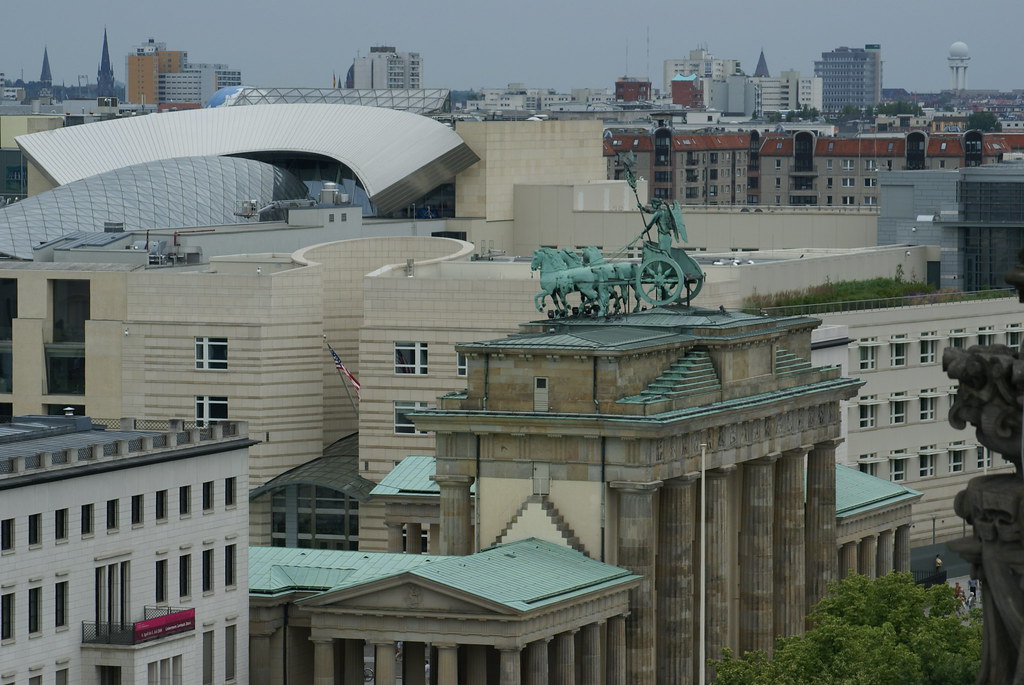
It would be wise to partake of Berlin's historical points, because it played a significant role in Europe after World War II. We should visit Checkpoint Charlie and the East Side Gallery. The East Side Gallery is a memorial section of the Berlin Wall which still stands, and is covered in murals by artists all over the world. (You can see it in virtual tour format - when you reach the webpage, read the history, then close it and follow the arrows on the ground through the opening in the wall - the murals are on the other side.) Next we'll visit the Brandenburg Gate, comemmorating the border between East and West that once stood there.

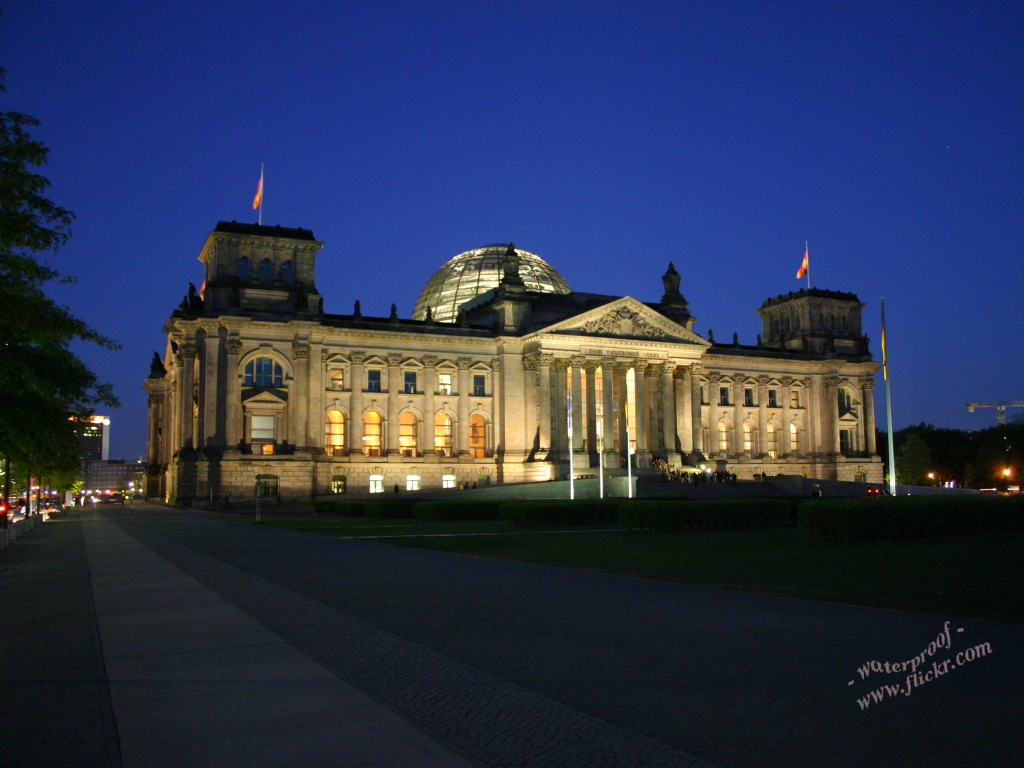
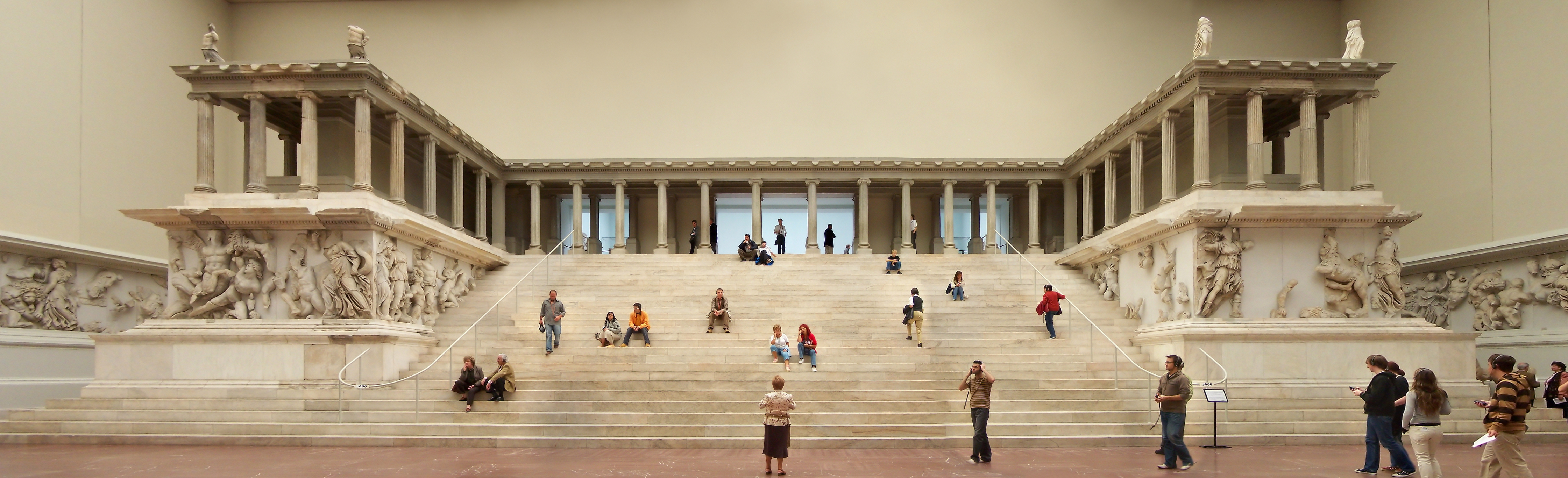
Next we'll want to stroll over the Reichstag, a five minute walk from the Gate. The Reichstag is home to the German Parliament, and from the top, offers a marvelous view over central Berlin. After taking in the view we'll head over to the Museum Island, a UNESCO World Heritage Site, and home to a number of fascinating museums and the Berlin Cathedral, seen on the postcard. Our tour guide Anja suggests visiting the Pergamon Museum, where many ancient excavation have been reconstructed, including the huge Pergamon Altar, the Market Gate of Miletus, and the Ishtar Gate. The Pergamon Museum houses an Antiquities Collection, an Islamic Art Museum, and the Middle East Museum.

After enjoying Museum Island, we might decide to take a day trip to Potsdam to see the Palace of Sanssouci, the former palace of Frederick the Great, King of Prussia. It has been said that it rivals Versailles in France.

Sadly, this is the end of our trip through Germany. It's been splendid - not the real thing, but close! I hope you enjoyed the tour! Look for travels through Turkey with my friend Pinar coming very soon. ;)


Friday, March 12, 2010

Welcome to Bremen! (Germany Vacation Part 2)

2 comments


Continuing our journey through Germany, we've hopped on a train in Cologne and now we're on our way to Bremen, three hours northeast of Cologne. Bremen is located in North Germany, and the city has been shaped by its close relationship with sea trade and the Hanseatic League. You can enjoy an interesting overview of the city at Bremen in 3 minutes. Important stops on our visit to Bremen will be the Bremen Town Musicians statue (a story by the Grimm Brothers, seen on the card to the left), the statue of Roland, Bremen's protector erected in 1404, and the Bremen Town Hall. We can wander through the Schnoor quarter, Bremen's oldest with houses dating to the 15th century. After wandering a while, we can stop at the new Universum, a hands-on science museum with about 250 exhibits.

After a day in Bremen, we're going to spend a day in Bremerhaven, about 40 minutes north of Bremen, and situated on the North Sea. We'll take a boat ride down the River Weser to get from Bremen to Bremerhaven, and then perhaps we'll head to the Klimahaus, which you can tour in 360 panorama. The Klimahaus takes the visitor on a journey along the 8th line of longitude, through the many different climates of the world. After the Klimahaus we'll go to the German Emigration Center, which details the history of German emigration to many countries. After our day in sunny Bremerhaven, we'll head back to Bremen to hop on a train to our final destination... which we'll visit in my next post!

Thursday, March 11, 2010

Germany Vacation, Part 1: Cologne

0 comments

As part of the Make Me Smile Round Robin I started several months ago, I started an experimental group called "I need a vacation," where the participants plan an itinerary for one another on the backs of three postcards. I am so excited with the results! Anjaaustel sent me on a wonderful trip through north Germany, complete with directions on which trains to take and what sights to see! So I thought I'd take you along with me. You can see her own text below; I'm just reiterating her own itinerary. I've spent a bit of time investigating many of these places, so I encourage you to click each of the links to get the most out of your virtual travel experience!

Our plane will land in Frankfurt, and then we'll take the hour-long ICE train to Cologne. When the train crosses the Hohenzollern Bridge over the Rhine, which you can see in the postcard image, we'll see the Cologne Cathedral for the first time. The train drops us right in front of the cathedral. Click here for your virtual tour of the interior.

After thoroughly exploring the cathedral, we're off the explore the Roman-German Museum next door. Cologne was founded as a Roman settlement, and the museum was built over an existing Roman mosaic.

Next we head down the stairs to walk along the Rhine for a while. We head into town a few blocks to visit the Chocolate museum and the Olympics and Sports Museum, and maybe take a break to have a pint of Kölsch, the local brew (and also the local dialect).

We continue our stroll around town and head to the Kölner Zoo, one of the best in Germany. We'll take our time here, because it's our last stop in Cologne. Tomorrow we'll head to another destination, a post which I'll share with you... tomorrow. ;)

Sunday, February 21, 2010

Whirling Dervishes and the Sema

4 comments


"Whirling dervish" just seems like an exotic, mysterious thing, doesn't it? I never knew quite what it was, but when I received this postcard in the mail from one of my favorite Postcrossers, pinuccia, I decided it was time to learn more about it. As my repeat readers will know, I have two favorite posting themes - dances and food. Today, it's a dance.

"Whirling dervish" is a colloquial name for members of the Mevlevi Sufi order, an Islamic sect founded in Konya, Turkey by Celaleddin Mevlana Rumi in 1273. The dancing ritual that the Mevlevi are famous for is called the Sema. Sema represents the mystical journey of man's spiritual ascent through mind and love to "Perfect," the state in which the follower grows through love, deserts his ego, and finds truth. To me, this all sounds
remarkably like Hindu mysticism, which I suppose could have influenced this sect in some respect.

The dance is divided into four parts - a song of praise to the Prophet Mohammad, followed by a bowing process and the removal of the black robes. The main dance, called the Four Selams, consists of the dancers, called semazen, spinning around the Sheikh. The semazen represent the moon, and the Sheikh represents the sun. The semazan spin on their right foot with their right palm facing upward toward heaven and the left hand pointing toward the ground, to represent a sort of communion of heaven and earth, as well as the spiritual ascension that believers experience. The Four Selams represent recognition of God, recognition of unity with God, ecstasy associated total surrender, and peace of heart due to divine unity. The ceremony is concluded with a recitation from the Holy Qu'ran.

From what I gather, the Mevlevi sect was abolished by Mustafa Kemal Ataturk and the monasteries were converted to museums. Decades later, the brotherhood was revived by the Turkish government as a "cultural association" - mainly for tourism reasons, I suspect. Now the brotherhood tours the world performing the ceremony.


Tuesday, February 16, 2010

Olympics time - go USA!

2 comments

Are you enjoying watching the Olympics? I know I am. Here's a postcard showing the beautiful Eden that is the home of the 2010 Winter Olympics. You can read more about the site of the 2010 Olympics by reading my blog post from December 1.


Keep up to date and support the US Olympic team here.

Saturday, February 6, 2010

Blizzard!

1 comments

To celebrate my first blizzard since moving to Pittsburgh three years ago, I thought I would post a collection of beautiful winter postcards I've received through Postcrossing. Here in Pittsburgh, the world is white, and the city is completely shut down. (In order these cards show: Utrecht, Netherlands; Bavaria, Germany; St. Petersburg, Russia; Kinderdijk, Netherlands; Copenhagen, Denmark; Norway; Germany; and Tallin, Estonia.)


Monday, February 1, 2010

Buddha Says Hello from Hong Kong

3 comments

This Buddha statue is located at Po Lin Monastery on Lantau Island, Hong Kong. His official name is the Tian Tan Buddha, and he was constructed out of bronze in 1993. The rest of the info comes almost directly from Wikipedia:


1. The base is a model of the Altar of Heaven or Earthly Mount Tian Tan, the Temple of Heaven in Beijing. (Hence the name.)
2. It is one of the five large Buddha statues in China.
3. He sits on a lotus throne on top of a three-platform altar.
4. It is surrounded by six smaller bronze statues known as "The Offering of the Six Devas" and are posed offering flowers, incense, lamp, ointment, fruit, and music to the Buddha. These offerings symbolize charity, morality, patience, zeal, meditation, and wisdom, all of which are necessary to enter into nirvana.
5. Buddha is 110 feet (34 meters) tall, and weighs 280 tons (250 metric tons).
6. Buddha's right hand is raised, representing the removal of affliction. Which is perfect, because my friend Iris sent me this postcard to cheer me up after a bad day.

To me, Hong Kong seems like a really fascinating place. As many people know, Hong Kong was a British territory from the mid 1800s until 1997, when governance was formally handed over to the Chinese government. As a result, Hong Kong is a unique blend of East and West - it has one of the world's leading economies, and it is among the healthiest and most well-educated regions in the world. Western institutions like fast food restaurants and a Hollywood-style film industry
are integrated with a very serious belief in feng shui and other folkloric beliefs - for instance, buildings often lack any floor with the number 4 in it, due to its resemblance to the word "die" in the Chinese language.

In Hong Kong, most people speak Cantonese, but English is also an official language, and many people speak it primarily or as a fluent second language. About 95% of Hong Kong's population is of Chinese descent, with small but visible enclaves of Indians, Pakistanis, Nepalese, Vietnamese, Europeans, Japanese, Koreans, and Filipinos. Interestingly, mainland Chinese do not have right of abode in Hong Kong, nor can they enter the territory freely.

About 90% of those living in Hong Kong practice a mix of local religions - mainly Buddhism, Confucianism, and Taoism. About 8% of the population is Christian, and there are smaller groups of Sikhs, Muslims, Jews, Hindus, and Baha'i. Religious freedom is guaranteed under the Basic Law.

Related Posts with Thumbnails